
The birds are chirping, the sun is staying out a little longer, and that familiar itch has returned—the urge to purge. For us, the “Neat Freaks” of the world, spring isn’t just a season; it’s a grand opening. It’s the time when cleaning therapy moves from a weekly habit to an all-out home transformation. We envision the end result: sparkling windows, a fridge that looks like a showroom, and the profound peace of living minimalist life.
But in our rush to reach that “clean-home euphoria,” we often overlook the most critical part of the process: our own well-being. This year, we’re doing things differently. We’re going to achieve that Pinterest-perfect home without the backaches or the bleach-fumes headache by following these essential spring cleaning safety tips.
Table of Contents
The Safety-First Toolkit: Gear for the Mindful Cleaner
Implementing spring cleaning safety tips is much easier when you have the right “instruments” in your symphony of order. These products are designed to take the strain off your body and keep your home environment non-toxic.
1. The Back-Saver: Electric Power Scrubber
- The Problem: Traditional scrubbing requires repetitive, forceful motions that strain the wrists, elbows, and lower back.
- The Safety Solution: An Electric Spin Scrubber with an adjustable extension arm. It allows you to scrub bathtub grime and floor tile grout from a standing position, eliminating the need to kneel or hunch over. Letting the motor do the work is a core spring cleaning safety tip for preventing joint fatigue.
2. The Chemical-Free Powerhouse: Pressurized Handheld Steamer
- The Problem: Using harsh degreasers in enclosed spaces can lead to respiratory irritation and chemical burns.
- The Safety Solution: A Handheld Pressurized Steam Cleaner. This tool uses only water to melt away stubborn kitchen grease and bathroom soap scum. By removing the need for caustic sprays, you naturally adhere to the most important spring cleaning safety tips regarding air quality and chemical reactions.
3. The Stability Essential: Heavy-Duty Step Stool
- The Problem: Reaching for the top of the fridge or dusting ceiling fans often leads to “improvised” climbing on chairs or counters.
- The Safety Solution: A Three-Step Folding Stool with a high-grip handle and anti-slip feet. It provides the stable base necessary to follow the “Three-Point Contact” rule. Investing in a dedicated stool is a fundamental spring cleaning safety tip for anyone tackling vertical clutter.
4. The Respiratory Guard: HEPA-Filter Vacuum
- The Problem: Standard vacuums often exhaust fine dust particles back into the room, aggravating allergies and asthma.
- The Safety Solution: A Cordless Vacuum with a Sealed HEPA System. This ensures that 99.97% of dust, dander, and mold spores are trapped inside the machine. Protecting your lungs is a vital part of spring cleaning safety tips, especially when moving long-settled furniture.
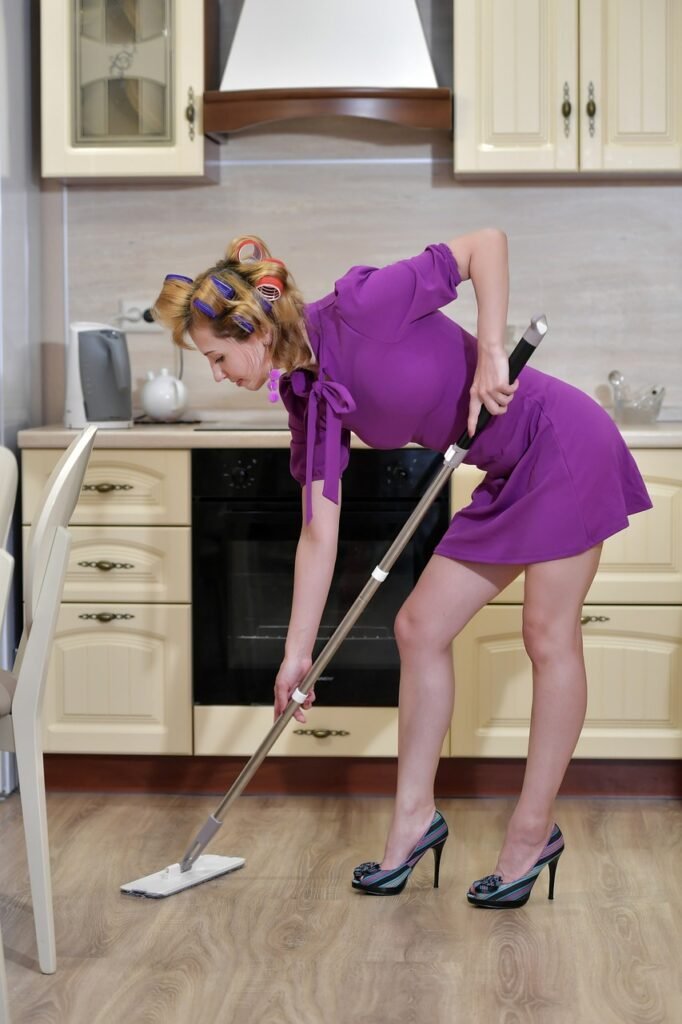
5. The Ergonomic Floor System: Spin Mop & Bucket
- The Problem: Lugging heavy buckets and hand-wringing mops can cause significant back and wrist strain.
- The Safety Solution: An O-Cedar EasyWring Microfiber Spin Mop. The foot-pedal system allows you to control the moisture level without bending over or using manual force. It’s a rhythmic, ergonomic way to keep your floors pristine while following spring cleaning safety tips for body mechanics.
True cleaning therapy is only possible when you feel safe and supported in your environment. By combining these spring cleaning safety tips with high-quality, ergonomic tools, you transform a potentially hazardous chore into a peaceful, life-affirming ritual.
To ensure your hard work sticks, you’ll want to avoid letting old habits creep back into your newly organized space. A common trap for any “Neat Freak” is allowing a single piece of furniture to become a dumping ground for “not-quite-dirty” clothes.
To keep your bedroom as pristine as your kitchen, check out our guide on managing The Laundry Chair so you can stop the “floordrobe” before it starts. This simple shift in habit is the perfect companion to your spring cleaning safety tips, ensuring your home stays a minimalist sanctuary rather than a “domestic Bermuda Triangle”.
A key part of kitchen safety is ensuring you have enough room to work without moving heavy appliances. Learning how to keep countertops clean through smart organization ensures that your ‘spring cleaning challenge’ leads to a permanently more efficient workspace.
A safe clean is a strategic one. By adopting a minimalist lifestyle, you reduce the number of items you have to clean and maintain, allowing you to focus your energy on what truly adds value to your day.
Chemical Safety: The “No-Mix” Zone
One of the most overlooked spring cleaning safety tips is product compatibility. We often think that if one cleaner is good, mixing it with another must be better. This is a dangerous misconception that can lead to hazardous air quality in your home. Mixing bleach with ammonia produces toxic chloramine vapor, while mixing bleach with vinegar produces chlorine gas. Even mixing hydrogen peroxide with vinegar creates peracetic acid, which is highly corrosive to your respiratory system.
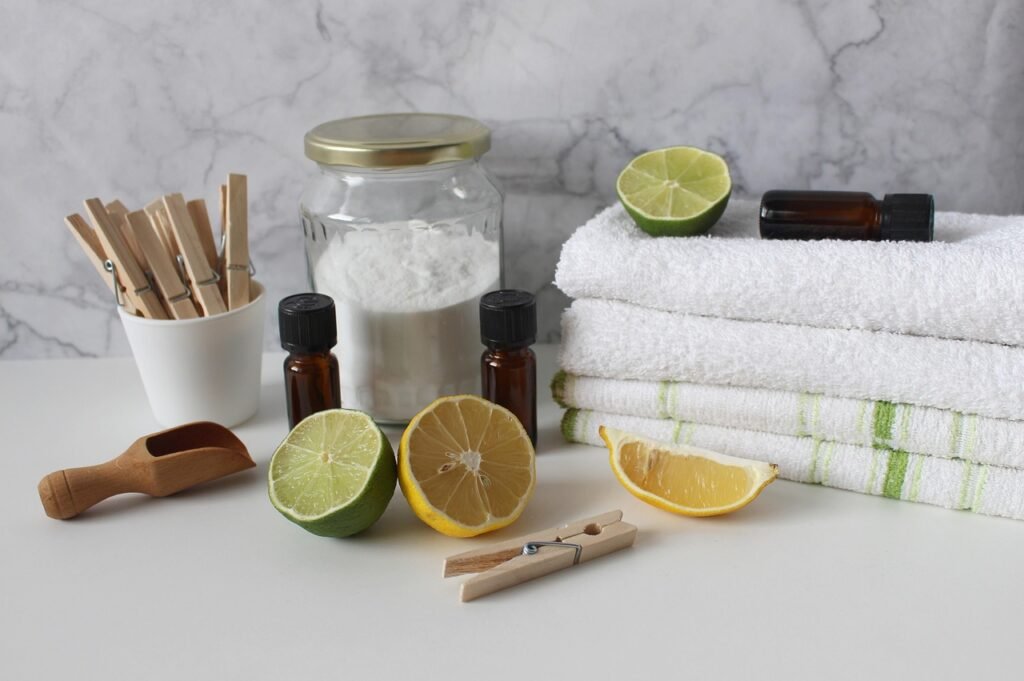
When you are practicing spring cleaning safety tips, the best approach is to simplify your inventory. This fits perfectly into the ethos of living minimalist life—fewer chemicals mean fewer warnings and more peace of mind. If you must use heavy-duty cleaners, always ensure proper ventilation by opening windows and doors to prevent fumes from lingering. If a stain is particularly stubborn, rinse the area completely with water before trying a second product to ensure no chemical reaction occurs on the surface.
Ergonomics: Protecting Your “Human Hardware”
Repetitive scrubbing and heavy lifting are the leading causes of wrist, shoulder, and back strain during the deep-clean season. This is where cleaning therapy can quickly turn into physical therapy if you aren’t careful. To adhere to proper spring cleaning safety tips, you must prioritize your posture over your pace. When moving furniture to reach hidden dust bunnies, always remember to squat and lift with your legs rather than bending at the waist; twisting while carrying a heavy load is the fastest way to sideline your progress.
To stay safe, let modern technology do the heavy lifting for you. Using an electric spin scrubber with an extendable handle allows you to clean grout and tubs without kneeling or straining your lower back. Similarly, a high-quality spin mop keeps you upright, preventing the repetitive stooping that leads to spinal fatigue. These spring cleaning safety tips ensure that your journey toward living minimalist life doesn’t come at the cost of chronic pain. Remember: if a task feels like it’s straining your body, stop and find a mechanical solution.
Height and Reach: Conquer Vertical Clutter Safely
A true neat freak knows that the real dust hides where the eyes don’t often travel: the tops of door frames, the blades of ceiling fans, and the highest shelves of the pantry. However, the most dangerous words in cleaning are: “I can just reach it if I stand on my tiptoes.” Respecting the ladder is one of the most vital spring cleaning safety tips. Never use a rolling office chair, a plastic crate, or a wobbly footstool as a makeshift ladder. Your center of gravity shifts the moment you look up to scrub, and a wobbly base is an invitation for a disaster.
To maintain proper spring cleaning safety tips while working at height, follow the “Three-Point Contact” rule. This means always having three points of contact with your ladder—two feet and one hand, or two hands and one foot. Additionally, remember the “Belt Buckle” rule: keep your center of mass between the side rails of the ladder. If you find yourself leaning out to reach a far corner, stop immediately.
Descend, move the ladder, and climb back up. It takes ten seconds, but it prevents a fall that could ruin your season of living minimalist life.nd tubs without kneeling or straining your lower back. Similarly, a high-quality spin mop keeps you upright, preventing the repetitive stooping that leads to spinal fatigue. These spring cleaning safety tips ensure that your journey toward living minimalist life doesn’t come at the cost of chronic pain. Remember: if a task feels like it’s straining your body, stop and find a mechanical solution.
Electrical and Water Safety: A Delicate Balance
Cleaning therapy often involves the generous use of water, steam, and liquid solutions, but our modern homes are packed with high-voltage electronics. Mixing the two requires a specialized set of spring cleaning safety tips to avoid shocks or equipment damage. Before you start deep-cleaning your kitchen appliances—the very heart of your kitchen clutter solutions—unplug them entirely. Whether you are wiping down the back of the refrigerator or degreasing your toaster, electricity and moisture are a lethal combination.
When utilizing high-pressure steam cleaners to sanitize surfaces, exercise extreme caution around outlets and control panels. One of the most important spring cleaning safety tips for appliance maintenance is to avoid spraying liquids directly into the vents of your microwave, oven, or dishwasher. Moisture can easily seep into internal circuit boards, leading to short circuits or permanent failure. Furthermore, be mindful of cord management; wet floors are naturally slippery, and a power cord wrapped around your ankle is a major trip hazard. By keeping your workspace dry and your electronics disconnected, you protect both your home and your physical safety.
Allergens and Air Quality: Don’t Breathe the Dust
When you begin moving furniture that hasn’t been touched in a year or emptying out forgotten storage bins, you are inevitably releasing a “dust bomb” of accumulated allergens, pet dander, and mold spores. For many, this sudden exposure leads to respiratory distress or “Spring Cleaning Sinusitis.” To ensure your efforts remain therapeutic, one of the most essential spring cleaning safety tips is to manage the air you breathe. If you are tackling a particularly neglected attic, basement, or garage, wearing a high-quality mask is a simple but effective way to protect your lungs from fine particulates.
In addition to physical barriers, your choice of equipment plays a major role in air quality. Use a vacuum equipped with a HEPA filter to ensure that you are actually capturing dust rather than simply blowing it back out into the room. Another vital spring cleaning safety tips protocol is to prioritize ventilation. Always open windows to create a cross-breeze, which helps flush out both airborne dust and any lingering scents from your cleaning products. For those committed to living minimalist life, opting for organic, fragrance-free cleaners can further reduce the risk of respiratory irritation, allowing you to breathe as clearly as your newly polished windows.
The Post-Clean Reset: Avoiding Physical Burnout
Living minimalist life is a marathon, not a sprint. After a full day of implementing spring cleaning safety tips, your body will inevitably be tired. Most cleaning-related injuries, such as minor muscle strains or ligament pulls, are not felt in the heat of the moment; they manifest the next morning once the adrenaline of the “cleaner’s high” has worn off. To prevent this, your post-clean routine is just as important as the scrub itself.
Treat a deep-clean day like a moderate workout. One of the most practical spring cleaning safety tips is to stay hydrated throughout the process to keep your muscles from cramping. Once the last mop is put away, take five minutes to perform basic stretches for your hamstrings, shoulders, and lower back. This reset helps transition your body from a state of high activity back to the peaceful stillness of your decluttered environment. The ultimate goal of cleaning therapy is that final moment of tranquility—make sure you are physically well enough to enjoy it.

No responses yet